Your Business Has Outgrown the Way You Run It
If doubling the size of your business requires twice the people, twice the management and twice the problems, you have grown, but you have not scaled.
Sep 15, 2026
If doubling the size of your business requires twice the people, twice the management and twice the problems, you have grown, but you have not scaled. This is the difference many businesses miss.
The growth path is familiar. More customers create more work, so the company adds more people, more supervision, more administration and more overhead. Revenue increases, but complexity and cost rise almost as quickly.
The scaling path is different. The owner decides what the future business needs to look like, identifies the work that genuinely creates value and redesigns the people, processes and technology around that future model. It is not about making the existing business bigger. It is about building a different version of the business - one capable of producing substantially more without requiring the same increase in people, costs and complexity.
What got you here won't get you there
The way most successful SMEs operate did not happen by accident. The owner remained close to customers, made decisions quickly and personally stepped in whenever something needed to be fixed. Processes were informal because everyone knew what was happening, and information did not need to travel through layers of management before somebody acted on it. That approach helped build the business. It may have been exactly what the company needed at the time.
But as the business grows, those same strengths can become its greatest constraints. The owner cannot remain involved in every decision. Informal communication becomes unreliable. Knowledge held in people's heads becomes a risk, and adding another employee every time the workload increases eventually makes the business more expensive rather than more productive. This is the difficult part of scaling. You must be prepared to change some of the things that made the business successful in the first place. What got you here won't get you there, but it has given you the experience, customer knowledge and commercial foundation needed to build what comes next.
Growth and scale are not the same thing
A business can grow significantly without becoming more scalable. It can add revenue, customers and employees while becoming increasingly difficult to manage. Every new customer generates more work. Every new employee requires more supervision. More transactions create more administration, and additional layers of management are introduced to deal with the complexity. The business becomes larger, but the underlying model remains unchanged. Scaling requires a different question. Instead of asking, "How many more people do we need to handle the additional work?", ask, "Why does the additional work require more people in the first place?"
If highly capable employees spend much of their day moving information between systems, repeating the same tasks or correcting avoidable errors, adding more people will not solve the underlying problem. It will simply make the inefficient process larger.
The owner cannot remain the operating system
In many growing businesses, the owner is still the person connecting everything. They understand the customers, know which employee can solve each problem and remember why certain decisions were made. When something unusual happens, the team asks the owner. When a customer needs an exception, the owner approves it. When two departments disagree, the owner decides what happens next. This can feel like control, but it is also a constraint. The business cannot move any faster than the owner can receive information, make decisions and respond.
The answer is not for the owner to work longer hours or become better at managing interruptions. The business needs to transfer knowledge, authority and accountability into the organisation. That means placing capable people in key roles and allowing them to take genuine ownership. It also means defining which decisions they can make, what results they are accountable for and what information they need to manage their area properly. Hiring people without transferring authority does not create management capacity. It creates more people waiting for the owner to make a decision.
You cannot keep adding people forever
If every new customer requires a corresponding increase in headcount, the business can grow its revenue, but its costs and operational complexity will grow with it. This is particularly common in service businesses. Work increases, so another person is hired. That person needs to be recruited, trained, managed and supported. As the team expands, the company adds supervisors and managers to coordinate the growing number of people and handovers. People should not be used indefinitely to compensate for processes that do not work.
Technology does not create scale by itself
Buying a new system is often treated as a scaling strategy. It is not. A business introduces new software, but the old process remains. Employees continue maintaining separate spreadsheets, information is entered several times and decisions still require approval from the same individuals. The company has added another tool without changing how the work is managed. Technology only creates leverage when it supports a clearly designed way of working.
AI creates an even greater opportunity, but the same rule applies. Adding AI to a poor process can produce the wrong answer more quickly. Used properly, however, it can remove repetitive work, improve consistency and create capacity that would otherwise require additional headcount. The purpose of technology is not to make the business look modern. It is to allow the organisation to deliver more, with greater consistency, without costs and complexity rising at the same rate.
Scaling requires a different form of control
Many owners resist changing the way they run the business because they are afraid of losing control. That concern is understandable. They have spent years building the company, protecting customers and ensuring the work is completed properly. They may already have experienced what happens when responsibility is delegated without adequate oversight. But scalable control does not mean personally checking everything. It means knowing that the correct people own the correct outcomes, the important measures are visible and problems are identified early enough to address them.
A smaller business often relies on personal control. The owner knows what is happening because they are involved in nearly everything. A scalable business relies on organisational control: clear responsibilities, repeatable processes, reliable information and agreed points at which issues must be escalated. The objective is not to give the owner less visibility. It is to give them better visibility without requiring their involvement in every transaction and decision.
We have had to recognise this in Rhomu too
This is not something we only discuss with clients. We have hired strong people and placed them in key roles with the authority and accountability to manage important parts of Rhomu properly. We also recognised that we could not scale our finance operations by continually adding more people. That is why we are building AI-based platforms, including LUCA, to remove repetitive work, create consistent processes and increase the number of clients our teams can support. We cannot build the future version of Rhomu by continuing to operate as we did when the business was smaller.
We have built this thinking into Rhomu's identity
Our belief in this approach goes beyond how we advise clients or how we are restructuring our own business. We have built it into the Rhomu brand itself. Our new logo represents the three elements we believe a business needs to scale properly: Finance Leadership, Finance Operations and Finance Tools. Finance Leadership is the people element: experienced leaders who understand the business, make better decisions and take real responsibility for financial performance. Finance Operations is the process element: the repeatable day-to-day work, controls and workflows that allow the finance function to operate consistently as the company grows.
Finance Tools, including LUCA, are the technology element: platforms that remove repetitive work, improve visibility and enable the team to support a larger business without simply adding more people. None of these elements is enough on its own. Strong people will eventually become overwhelmed by poor processes. A good process will remain limited if every stage depends on manual work. Technology will not solve anything if ownership is unclear or the underlying process has not been properly designed. That is how strongly we believe people, processes and tools need to work together. We have designed not only our operating model around them, but the identity of the company itself.
For us, it is not a slogan added after the fact. It represents how we believe a modern finance function, and a scalable business, should be built.
Build the future business, not a larger version of the current one
Before hiring the next person or introducing the next management layer, step back and consider the business you are trying to build.
What work genuinely creates value for customers? Where are capable people being consumed by repetitive administration? Which decisions still depend unnecessarily on the owner? What knowledge exists only in someone's head? Which activities could be simplified, standardised, automated or stopped completely?
Most importantly, ask whether the current operating model is capable of supporting the future scale of the company.
If it is not, continuing to add people may allow the business to grow, but it will also increase the cost and complexity of eventually changing it.
Scaling is not about removing people or expecting technology to solve everything. It is about building the right combination of people, processes and tools for the business you intend to become.
If doubling the size of the company requires twice the people, twice the management and twice the problems, you have grown, but you have not scaled.
What got you here won't get you there. The next version of your business must be designed, not simply allowed to become bigger.
Have a question about how this applies to your business?
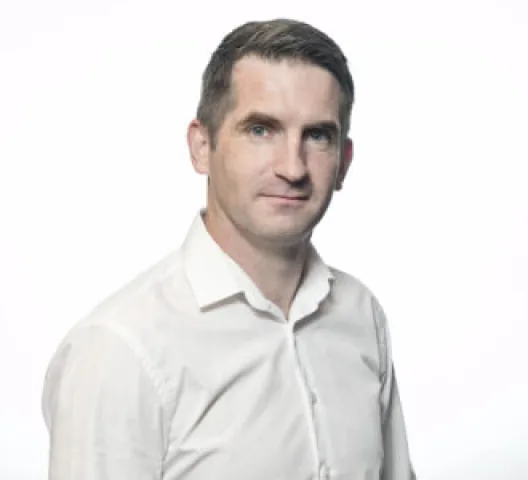
About the author
Mike Barnes
Senior CFO
Michael works with ambitious business owners who want clarity in their numbers and confidence in their decisions. With over 20 years’ experience in finance, risk and operations, he helps SMEs improve cash flow, strengthen profitability, and build the right structure for growth.
View Mike's profileFrequently asked questions
What is the difference between growing and scaling a business?
Growth usually means increasing revenue by adding more resources, such as employees, management and operating costs. Scaling means increasing what the business can deliver without its costs and complexity rising at the same rate.
How do I know if my business has outgrown the way it is managed?
Warning signs include too many decisions returning to the owner, repeated hiring to manage additional workload, inconsistent processes, important knowledge being held by individuals and the same information being manually transferred between different systems.
Why does the owner become a constraint on growth?
The owner becomes a constraint when too many customer relationships, decisions, approvals and pieces of business knowledge depend on them personally. The organisation cannot move faster than the owner's capacity to receive information and make decisions.
Can technology make a business scalable?
Technology can create capacity, consistency and visibility, but only when it supports a properly designed process with clear ownership. Introducing a new system without changing how work is managed usually adds another tool rather than creating genuine scale.
Does scaling mean reducing the number of employees?
No. Scaling means using people where their experience, relationships and judgement create the greatest value, while redesigning or automating work that does not require those capabilities.
What does a business need to scale successfully?
A scalable business needs capable people with clear responsibility, repeatable processes and tools that increase what the team can deliver. These elements must work together rather than being treated as separate projects.